
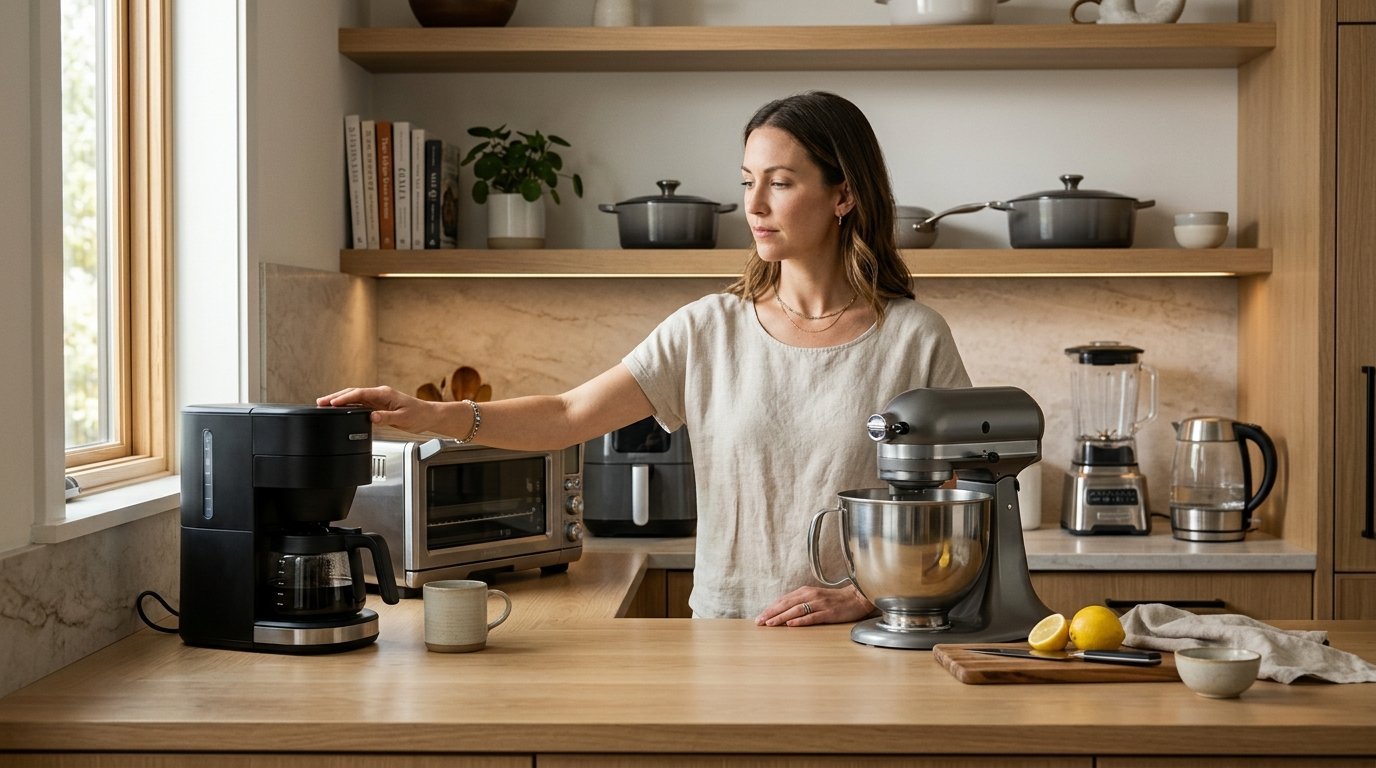
Kitchen appliances have a high abandonment rate. They are bought with genuine enthusiasm, used intensively for a fortnight, and then moved progressively further back in the cupboard. The question that predicts this is not "is it good" — most of them work fine — but "will I use it often enough to justify getting it out."
The test worth applying
Before buying, ask three things. How often would I realistically use this in a normal month? How much effort is it to set up, use and clean? And what does it replace — a task I do badly, or one I already do fine with a pan?
The appliances that survive are the ones used weekly, that are quick to clean, and that do something genuinely difficult by hand. The ones that fail are used occasionally, awkward to wash, and replace something a pan already did.
Cleaning is the underrated variable. An appliance with many parts, hand-wash-only components, or a blade assembly that traps food gets used less regardless of how good it is.
The ones that usually earn their place
A good kettle, if you drink tea or coffee. Used daily, stores nothing, replaces nothing.
A decent blender or stick blender. A stick blender is the underrated one — cheap, small, washes in seconds, and it does soups, sauces and smoothies without decanting hot liquid into a jug. For most households it covers 80% of what a full blender does at a fraction of the space.
A food processor, if you cook from scratch regularly. Chopping, slicing and grating in bulk is the thing it genuinely does better than hands. If you cook mostly simple meals, it will not get used.
A slow cooker or multi-cooker. Popular for good reason: it handles a category of cooking that requires no attention, which suits busy households. Multi-cookers combine several functions in one footprint, which is the right trade when counter space is short.
An air fryer, with a caveat. They are essentially compact convection ovens, and they are genuinely faster and more energy-efficient than heating a full oven for small quantities. For one or two people they can replace the oven for most weeknight cooking. For larger households the capacity becomes limiting and you end up cooking in batches.
A microwave, for reheating and defrosting. Unfashionable and used constantly.
The ones that usually do not
- Single-purpose appliances. Egg boilers, quesadilla makers, popcorn machines, electric pancake pans. They do one thing a pan already does.
- Bread makers, for most people. Rewarding for those who take to it, and a large object in a cupboard for everyone else. Rent the enthusiasm before you buy the machine — try making bread by hand first.
- Juicers. Often excellent machines, almost always defeated by the cleaning. Check how many parts come apart and whether they are dishwasher safe before committing.
- Stand mixers, unless you bake regularly. They are superb, they last decades, and they are heavy enough that if they live in a cupboard they will stay there.
- Speciality coffee equipment, unless you are genuinely interested in the process. An espresso machine that requires attention will disappoint someone who wants coffee quickly.
Judging quality before buying
For anything with a motor, the wattage tells you something but not everything. Build matters more: metal drive couplings rather than plastic, a stable base that does not walk across the counter, and a well-fitted lid.
Look for whether parts are available separately. An appliance whose jug, blade or seal can be replaced is one you can keep for years; one where a cracked jug means a new machine is disposable by design.
Read reviews specifically for failures after a year rather than first impressions. Most appliances review well on arrival. The useful reviews are the ones written later.
Buying second-hand
Kitchen appliances are one of the best second-hand categories precisely because of the abandonment problem — a great many are sold barely used. Stand mixers, food processors and bread makers appear constantly on local listings at a fraction of new prices.
Check it runs before buying, confirm all attachments are present, and look up whether replacement parts are still available for that model.
Before you buy anything
Measure the space, including the height under any wall cupboard — this is the classic mistake with tall blenders and stand mixers. Decide where it will live when not in use. If the honest answer is "I will get it out when I need it", accept that this means it will be used rarely, and price the purchase accordingly.