
The appeal of an outlet is straightforward: the same brand at a lower price. Sometimes that is exactly what you get. Other times you are buying a product that was designed from the start to be sold at that price, and the "original" price on the tag is doing a lot of work.
Two kinds of outlet stock
Overstock and past-season goods are what most people picture. These are items that did not sell in the main shops, ended-run colours, or last season's ranges. The brand needs the stock gone, and the discount is real because the alternative is holding inventory.
Made-for-outlet lines are produced specifically for outlet retail. They carry the same brand name and look broadly similar to the main range, but they are built to a lower cost — often lighter fabric, simpler construction, fewer finishing details. This is a legitimate and widespread practice, and it is not fraud. But the item was never sold at the higher "was" price anywhere.
How to tell them apart
There is no universal rule, but several signals help:
- Check the main website. If the exact item, in that colour, exists or recently existed in the regular range, you are probably looking at genuine overstock.
- Look at the product code. Some brands use distinct codes or label markings for outlet lines. A quick search of the code sometimes reveals which range it belongs to.
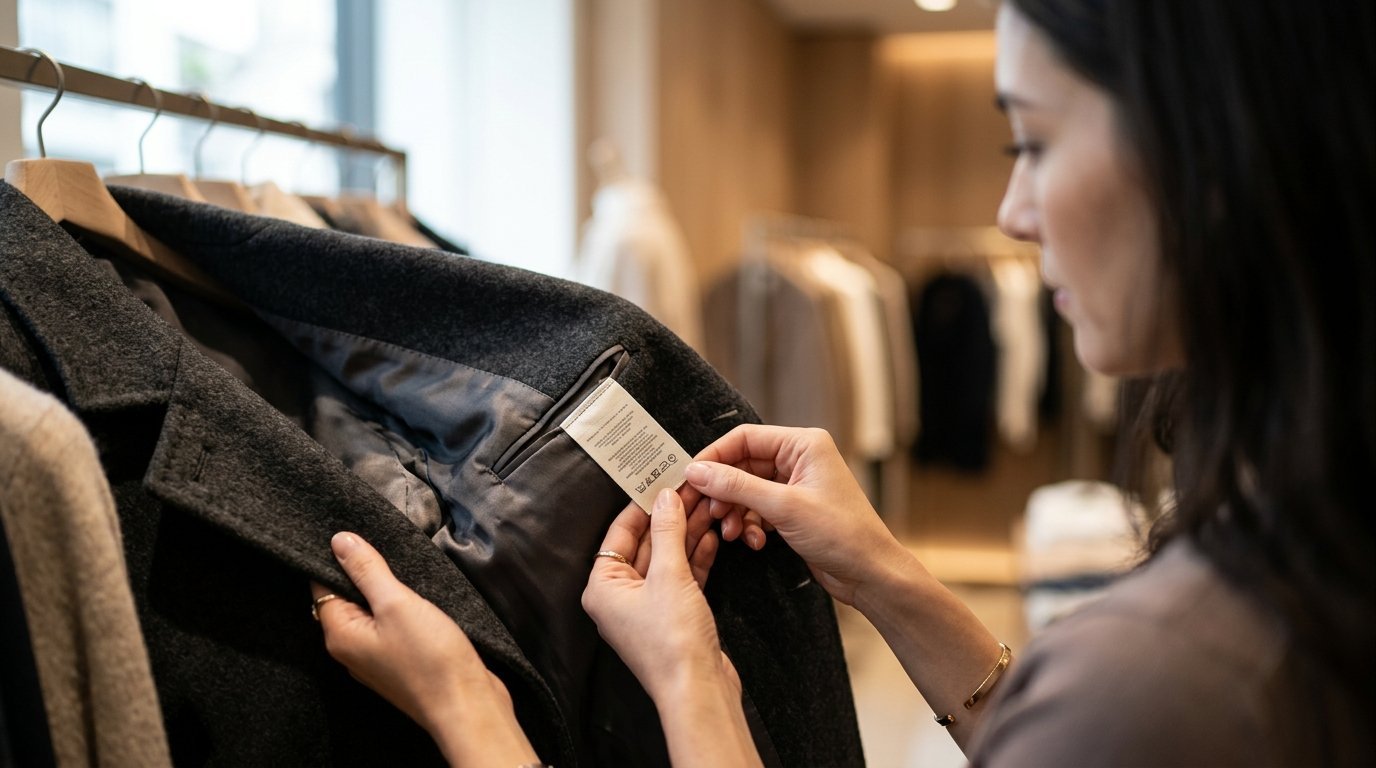
- Read the fabric label and compare. If the main-line version of a similar garment is a wool blend and the outlet version is mostly synthetic, they are different products.
- Assess the construction directly. Seam finishing, lining, button quality and fabric weight are all visible. Compare against a main-line item you own from the same brand.
- Notice full size runs. Genuine clearance stock has gaps — odd sizes missing, one or two colours left. A rail with every size in every colour is a produced line, not a leftover one.
What the "was" price means
Comparison pricing rules vary by country, and enforcement varies more. In some markets a retailer must have genuinely offered the item at the higher price for a set period. In others, a "recommended retail price" or "compare at" figure can be largely notional.
The practical response is to ignore the percentage on the tag and judge the item on its actual price. Ask whether you would pay this amount for this garment if there were no reference price at all. That question cuts through most outlet marketing.
Where outlets genuinely win
Outlets are often excellent for a few specific things:
- Staples in classic colours. Plain knitwear, basic shirts, neutral outerwear — items where last season's version is indistinguishable from this season's.
- Footwear in less common sizes. Very small and very large sizes are frequently the ones left over, which works in your favour if that is your size.
- Premium brands you would not otherwise buy. Even a made-for-outlet item from a genuinely high-end maker can be well constructed.
- Children's clothing. Outgrown quickly enough that last season's range is a non-issue.
Where they do not
Technical products are the main caution. Waterproof jackets, running shoes and performance layers depend on specific materials and construction, and an outlet version may use an older or lower-grade membrane, less durable cushioning, or fewer taped seams. For anything where performance matters rather than appearance, check the specification rather than the brand.
Before you make the trip
Outlet villages are usually out of town, and the cost of getting there is part of the price. Add fuel or transport, parking and the near-inevitable lunch, then ask whether the trip still makes sense. If you are going for one specific item, phone ahead — many outlets will confirm stock and sizes, which saves the whole journey.
Check the returns policy too. Outlet purchases are sometimes final sale or restricted to exchange only, and the store you bought from may be the only place that will take it back. That matters a great deal if the shop is ninety minutes away.
The honest summary
Outlets are a real way to spend less, provided you buy the item in front of you rather than the discount on the tag. Judge the fabric, judge the construction, ignore the "was" price, and the trip will usually be worth it.