Returning clothes is tedious, and increasingly it is not free. The good news is that most online sizing failures come from a small number of avoidable mistakes, and fixing them is mostly a matter of five minutes with a tape measure.
Measure yourself once, properly
Your dress size or trouser size is a brand's opinion. Your measurements are a fact, and every decent size chart is built on them. Take these with a soft tape measure, standing relaxed, over thin clothing or none:
- Chest or bust: around the fullest part, tape level all the way round.
- Waist: around the narrowest point, usually just above the navel. Do not hold your breath.
- Hips: around the fullest part, generally around 20cm below the waist.
- Inside leg: from the crotch to where you want the hem to sit, wearing the shoes you would normally wear with those trousers.
- Shoulder width: from one shoulder bone to the other across the back.
- Sleeve length: from the shoulder bone, over a slightly bent elbow, to the wrist.
Write them in a note on your phone with the date. Check again every year or so.
Use the brand's chart, not a generic one
Sizing is not standardised between brands, and often not between ranges within a single brand. A medium from one label can be two full sizes away from a medium at another. Always open the specific retailer's size guide, and if there is a separate chart for that product, use that one.
When your measurements straddle two sizes, the usual advice is to size up for structured garments — blazers, coats, tailored trousers — because taking something in is far easier than letting it out. For stretchy or loose items, the smaller size is often the better call.
Garment measurements beat body measurements
Some retailers publish the flat measurements of the garment itself: chest width laid flat, length from shoulder to hem, sleeve length. This is the most useful data available, because it removes the guesswork about how much room the maker intended.
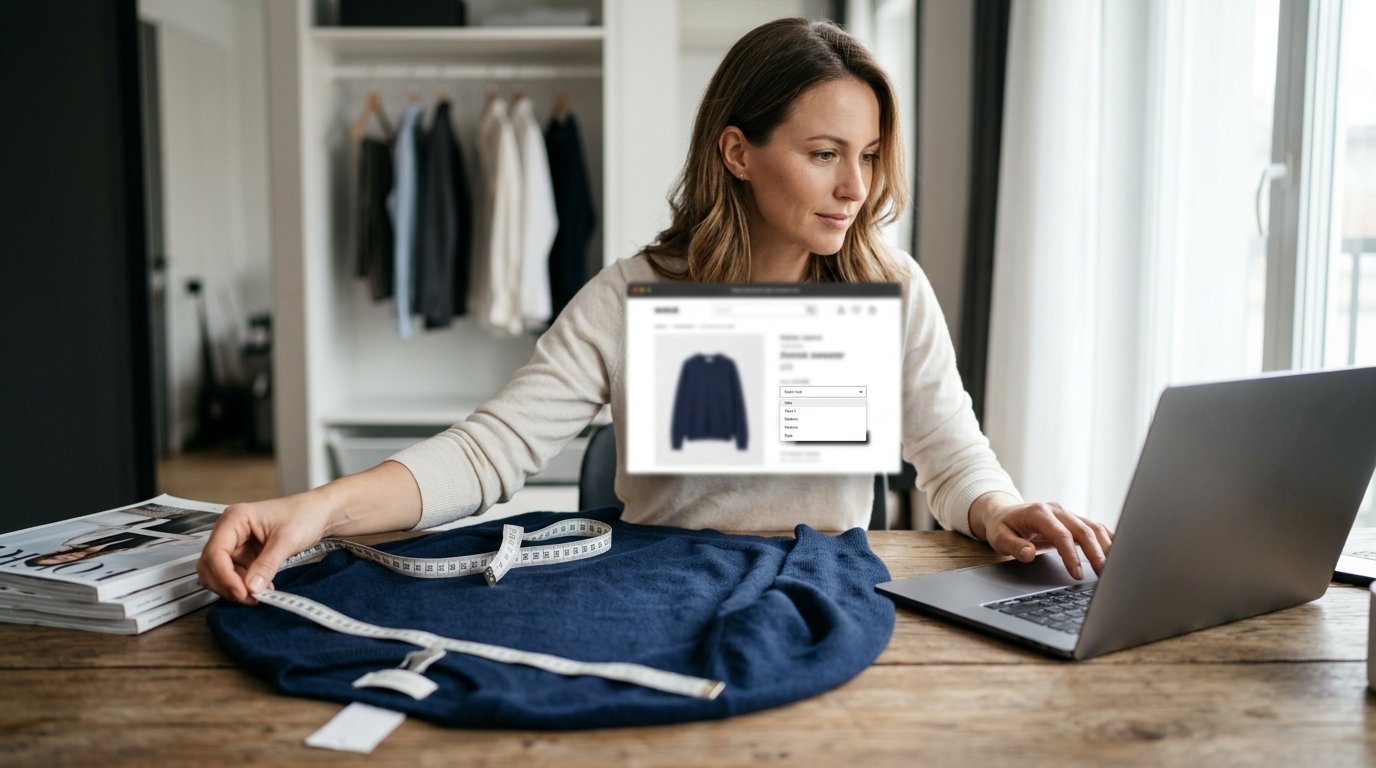
To use it, measure a garment you already own and like the fit of, laid flat on a table, and compare directly. This single habit eliminates most fit surprises. It works especially well for shirts, t-shirts and jackets.
Read reviews for fit, not for sentiment
Star ratings tell you little. The comments about fit tell you a great deal. Look specifically for:
- Repeated mentions of running small or large. One person's opinion is noise; ten people saying the same thing is a pattern.
- Reviewers who state their measurements and the size they bought. This is the most valuable review there is.
- Comments on specific areas — tight across the shoulders, short in the body, narrow in the calf. These are the details a size chart cannot convey.
- Anything about shrinkage after washing, which changes what size you should order.
Photographs from customers are worth more than the studio images, because they show the garment on ordinary bodies in ordinary light.
Think about how the fabric will behave
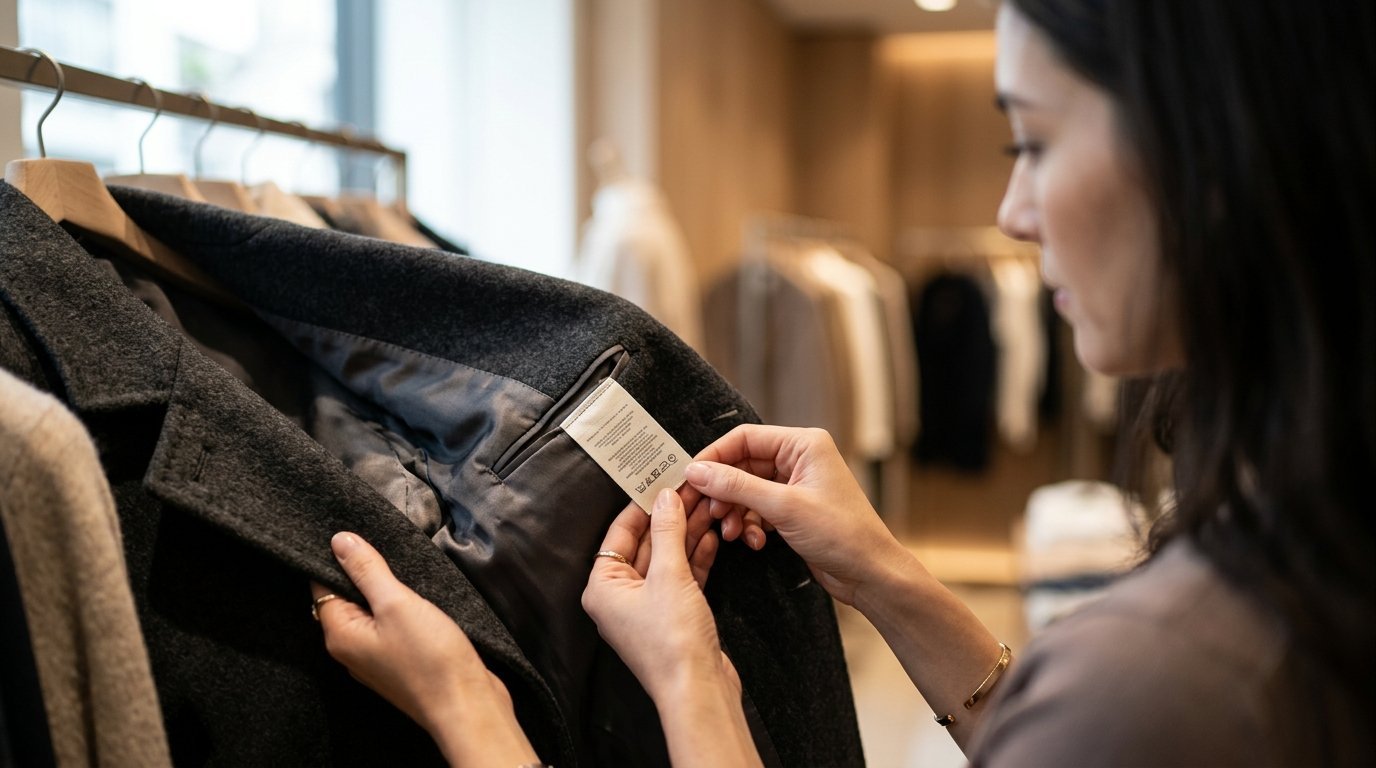
The fibre content predicts fit as much as the measurements do. Something with elastane will accommodate a borderline measurement. Rigid denim with no stretch will not, and it will feel tight until it eases. Loosely knitted fabrics tend to grow with wear; densely woven ones hold their shape.
Untreated cotton and viscose may shrink on the first wash. If the reviews mention it and you are between sizes, that settles the decision.
Check the returns terms before you order
This is the part that turns a fit gamble into a real cost. Look for:
- How long the return window is, and whether it starts from dispatch or delivery.
- Whether return postage is free, deducted from the refund, or entirely yours.
- Whether sale items are returnable at all.
- Whether you get a refund or store credit.
- Whether there is a drop-off point near you, or whether it must be collected.
A slightly more expensive retailer with free, simple returns is often cheaper in practice than a bargain seller charging for every parcel back.
Order deliberately
Buying the same item in two sizes intending to return one is a common tactic, and some retailers now discourage it or charge for it. If returns are free and the policy allows it, it is a reasonable approach for a single important purchase. It is a poor default habit — it ties up your money, and enough of it has pushed several retailers to end free returns entirely.
The better approach is to spend the five minutes on measurements up front. It is less effort than a single trip to the post office.