
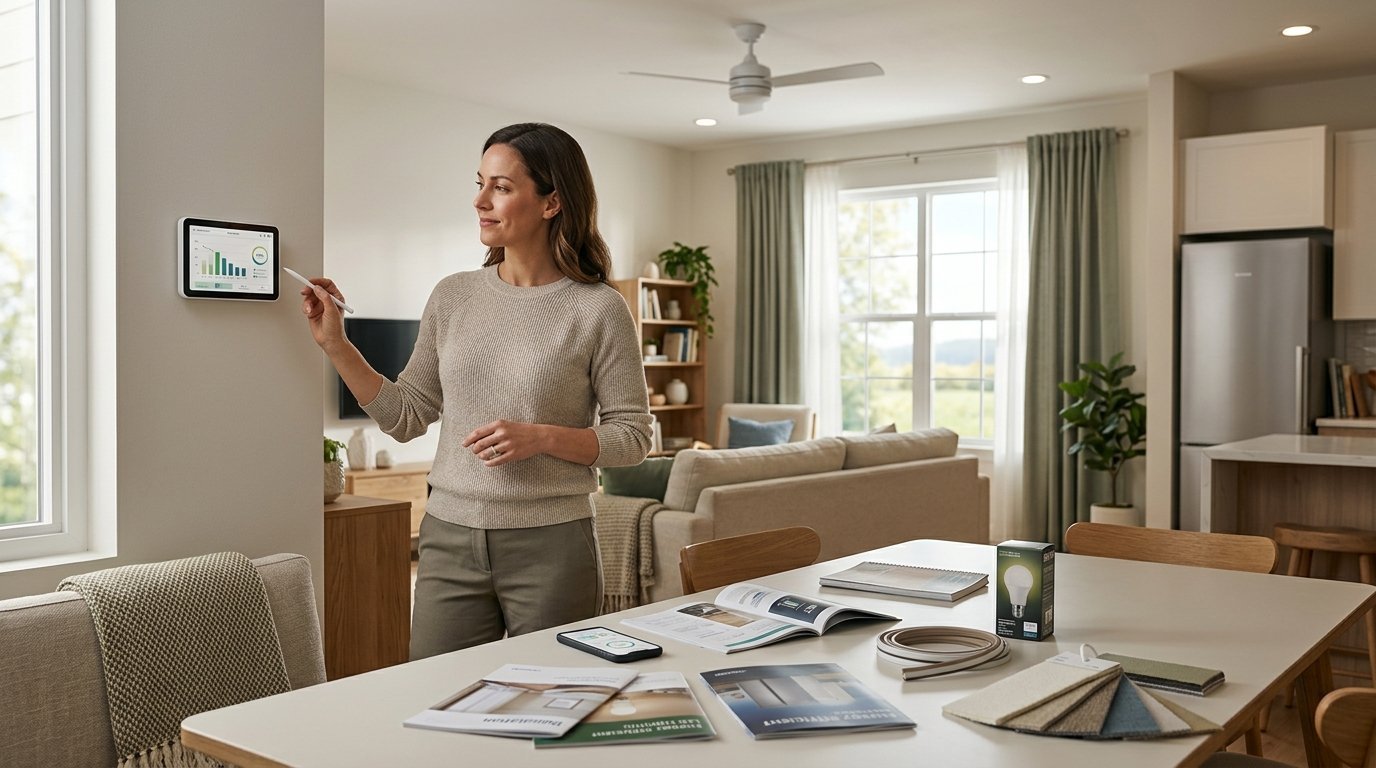
Energy efficiency is sold with a lot of enthusiasm and not much arithmetic. Some measures repay their cost within a season; others take longer than you will own the house. The pattern is fairly consistent: stopping heat escaping is cheap and effective, while replacing systems and generating energy is expensive and slower to repay.
Costs, savings and available grants vary enormously by country, climate and property, so treat the ordering below as general and get local figures before committing to anything substantial.
How to think about payback
Divide the cost of the measure by the annual saving to get the payback period in years. A measure costing a modest amount that saves meaningfully every year pays back quickly; an expensive system saving a similar amount does not.
Two adjustments. If you are unlikely to stay long, weigh whether the measure adds value at sale. And note that comfort has worth independently of money — a house that is no longer draughty is more pleasant to live in whatever the spreadsheet says.
The quick wins
Draught-proofing. Cheap strips around doors and windows, a letterbox brush, a chimney balloon for an unused fireplace, sealant around skirting and floorboard gaps. Materials cost very little, the work is a weekend, and in a draughty house it is the most cost-effective thing you can do. It also produces an immediately noticeable difference in comfort.
Loft insulation. If your loft has none or has thin, compressed old material, topping it up to current recommended depth is inexpensive relative to the saving. Heat rises, and an uninsulated loft is the largest single escape route in most houses. Do not compress it and do not block the ventilation at the eaves.
Hot water cylinder jacket. If you have an uninsulated cylinder, a jacket costs very little and repays almost immediately.
Pipe insulation on exposed hot water pipes. Cheap foam sleeves, minutes to fit.
LED lighting. Replacing remaining halogen or incandescent bulbs is cheap and repays quickly, particularly for lights used many hours a day. Replace as they fail rather than all at once unless the old ones are very inefficient.
Heating controls. A programmable thermostat, and thermostatic valves on radiators so you are not heating unused rooms. Modest cost, and the saving depends largely on whether you actually adjust the settings.
The medium-term measures
Cavity wall insulation, where the property has a suitable cavity. Substantial saving in older houses with unfilled cavities, and often subsidised. It is not appropriate for every property — exposed locations and certain wall conditions can cause damp problems — so get a proper survey rather than a doorstep sales assessment.
Floor insulation, particularly over an unheated space or a suspended timber floor. More disruptive, but effective in older houses with noticeable cold coming from below.
Double or secondary glazing. Replacing single glazing makes a real difference. Replacing functioning double glazing with slightly better double glazing rarely pays back on energy grounds alone — that is a comfort, noise and appearance decision. Secondary glazing is much cheaper than replacement and is often the sensible answer in period properties where replacement is restricted.
The long-payback measures
Solid wall insulation. Effective in houses with no cavity, and expensive. Internal insulation reduces room size and requires redecoration; external changes the appearance and may need permission. Genuinely transformative for comfort in a cold solid-walled house, but the payback is long without a grant.
Replacing a working boiler or heating system. Efficiency gains between a reasonably modern system and a new one are usually modest relative to the cost. Replace when it fails or becomes unreliable, and choose efficiently at that point.
Solar panels and heat pumps. Both can make good sense, and both depend heavily on local incentives, energy prices, your property's suitability and how much energy you use during the day. Payback varies from reasonable to very long. Get several quotes with modelled figures for your specific property, and be sceptical of headline numbers from a company that also sells the installation.
The things that cost nothing
Lowering the thermostat slightly, heating only occupied rooms, closing curtains at dusk, bleeding radiators so they heat fully, keeping furniture from blocking radiators, and washing clothes at lower temperatures. These require no purchase and no payback calculation at all.
Start with a survey rather than a product
Before spending, find out where your particular house loses heat. Many countries run subsidised or free energy assessments, and some suppliers offer them. A thermal imaging survey in cold weather shows exactly where the losses are.
That order matters. It stops you insulating a wall while the loft hatch is uninsulated and the front door has a gap under it — which is the common and expensive mistake.