
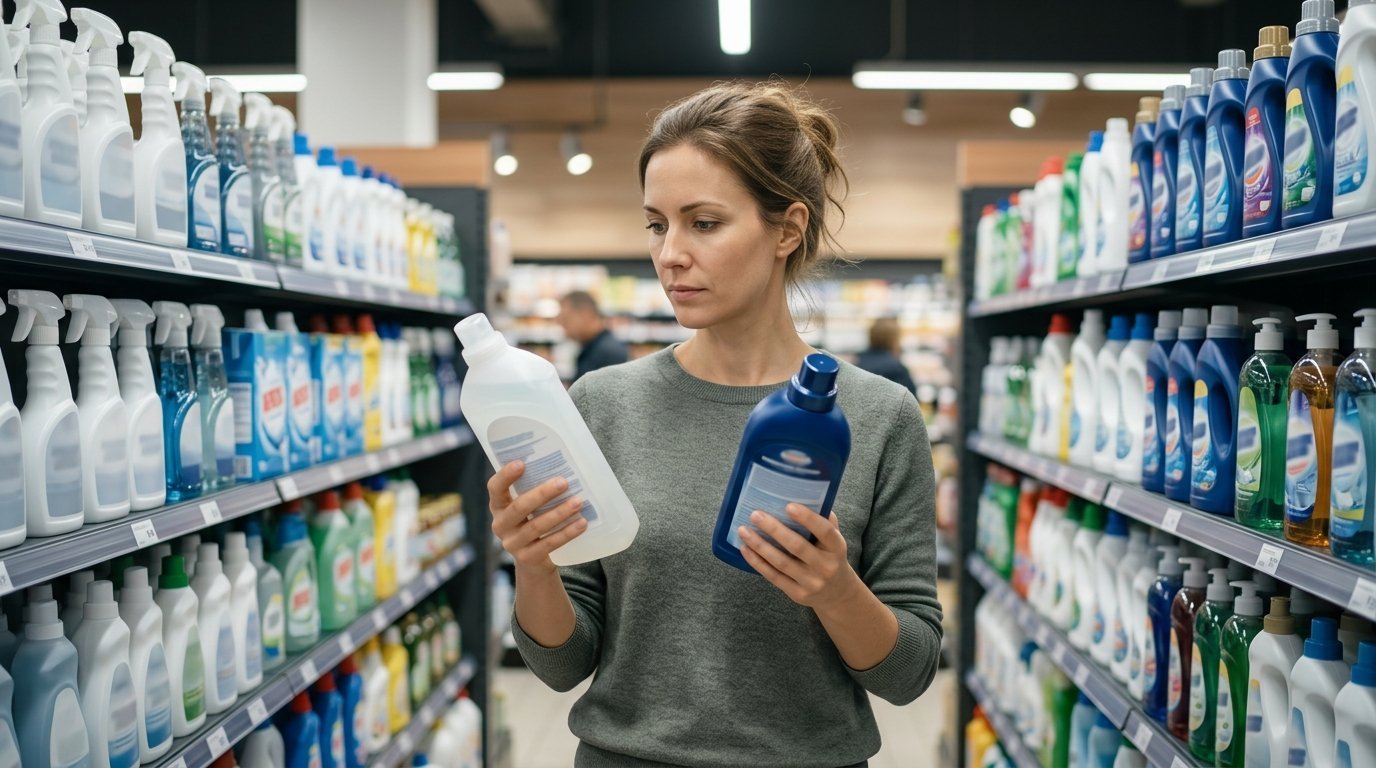
Cleaning products are one of the categories where the gap between the cheapest and most expensive option is large and the difference in performance is frequently small. Not always — some branded formulations genuinely work better — but often enough that this is a category worth examining.
One important note before anything else: never mix cleaning products. Combining bleach with acidic cleaners or with ammonia produces dangerous gases. Use one product, rinse, then use another if needed.
Read the active ingredients
Cleaning products list their contents, and comparing two labels tells you a great deal. For many everyday products the working ingredients are the same chemicals at similar concentrations, and the differences are in fragrance, colour, thickness and packaging.
Bleach is a good example. The active ingredient is sodium hypochlorite, and the concentration is what determines strength. A thin own-brand bleach at the same concentration as a thickened branded one does the same disinfecting job; the thickener helps it cling to vertical surfaces, which matters for toilets and matters not at all for a bucket of water.
Similarly, most surface sprays are surfactants, solvent, water and fragrance. Own-brand versions are commonly close to equivalent.
Where branded products often are better
Laundry detergent. This is the clearest case for spending more. Detergent formulation is genuinely complex — enzyme blends targeting different stain types, optical brighteners, anti-redeposition agents. Independent testing consistently finds meaningful differences between products, and the cheapest are frequently poor. That said, some own-brand detergents test very well, so the question is which product rather than which brand tier.
Dishwasher tablets. Same story. Cheap tablets often leave residue or fail on dried-on food. Mid-range own-brand tablets frequently perform close to premium ones, while the very cheapest usually do not.
Specialist products. Limescale removers, oven cleaners and drain products vary more in formulation, and the better ones save real effort.
Cloths and sponges. Microfibre quality varies substantially, and good microfibre lasts many more washes. This is a small purchase where quality is noticeable.
Where the cheap version is fine
- Bleach, comparing concentration rather than brand.
- General surface sprays for everyday wiping.
- Washing-up liquid, where the main difference is concentration — a cheaper one used slightly more generously often works out level.
- Glass cleaner, which is largely water, alcohol and a little surfactant.
- Cream cleaners and basic scouring products.
- Bin liners, foil and cling film, where the only real variable is thickness.
Compare by unit, not by bottle
Package sizes differ deliberately, which makes shelf prices hard to compare. Use the unit price on the shelf label — per 100ml or per wash — since that is the only comparable figure.
For laundry and dishwashing, cost per wash is the number that matters, not cost per bottle or box. A larger box of tablets is not automatically better value.
Watch concentration too. Concentrated formulas use less per wash, so a smaller, dearer bottle can be cheaper in use. The dosing instructions tell you.
The very cheap basics
Some traditional products handle a surprising amount of routine cleaning for very little money. White vinegar is effective on limescale and glass. Bicarbonate of soda works as a mild abrasive and deodoriser. Both are inexpensive and widely available.
They are not a complete replacement for everything — they do not disinfect the way a proper disinfectant does, and vinegar should not be used on natural stone, where the acid damages the surface. But for a large share of everyday cleaning they work perfectly well. And again: never mix vinegar with bleach.
A sensible approach
Try own-brand first for anything where the active ingredients look comparable, which is most surface cleaners and bleaches. Spend more on laundry and dishwasher products, where formulation genuinely differs, but check independent testing rather than assuming the most expensive is best. Buy concentrated where available, compare on unit price, and keep a couple of the cheap basics for routine jobs.
Buying in bulk saves money on things you use constantly, provided you have the storage and the product does not degrade. Most cleaning products keep well, though check dates on anything enzyme-based.