Sleep is a large and enthusiastic market, and the products range from genuinely useful to entirely decorative. A reasonable way to sort them is to ask what specific problem each one solves, and whether you have that problem.
One thing first: persistent poor sleep, loud snoring with pauses in breathing, or daytime exhaustion despite adequate time in bed are worth discussing with a doctor. No purchase substitutes for that conversation, and some sleep problems have treatable medical causes.
The mattress, and how to buy one without guessing
This is the largest purchase in the category and the one most likely to matter. A few practical points:
There is no universally best firmness. It depends on your weight and the position you sleep in. Side sleepers generally need more give at the shoulder and hip; front sleepers usually need firmer support to keep the spine from sagging; back sleepers sit in between. If two people share a bed and differ substantially in weight, that is a genuine complication worth raising with the retailer.
The trial period is the most important term. You cannot assess a mattress in a showroom in five minutes. A trial of several weeks, with a clear returns process and no large collection fee, is worth more than a modest discount. Read specifically how the return works — who collects it, what it costs, and whether you need the original packaging.
Ignore coil counts and layer names as marketing. Above a reasonable minimum, more springs is not straightforwardly better, and proprietary foam names tell you nothing comparable. Density and thickness of the comfort layers, and the warranty, are more informative.
Timing. Mattresses are discounted frequently and heavily. There is rarely a reason to pay the full listed price.
Pillows
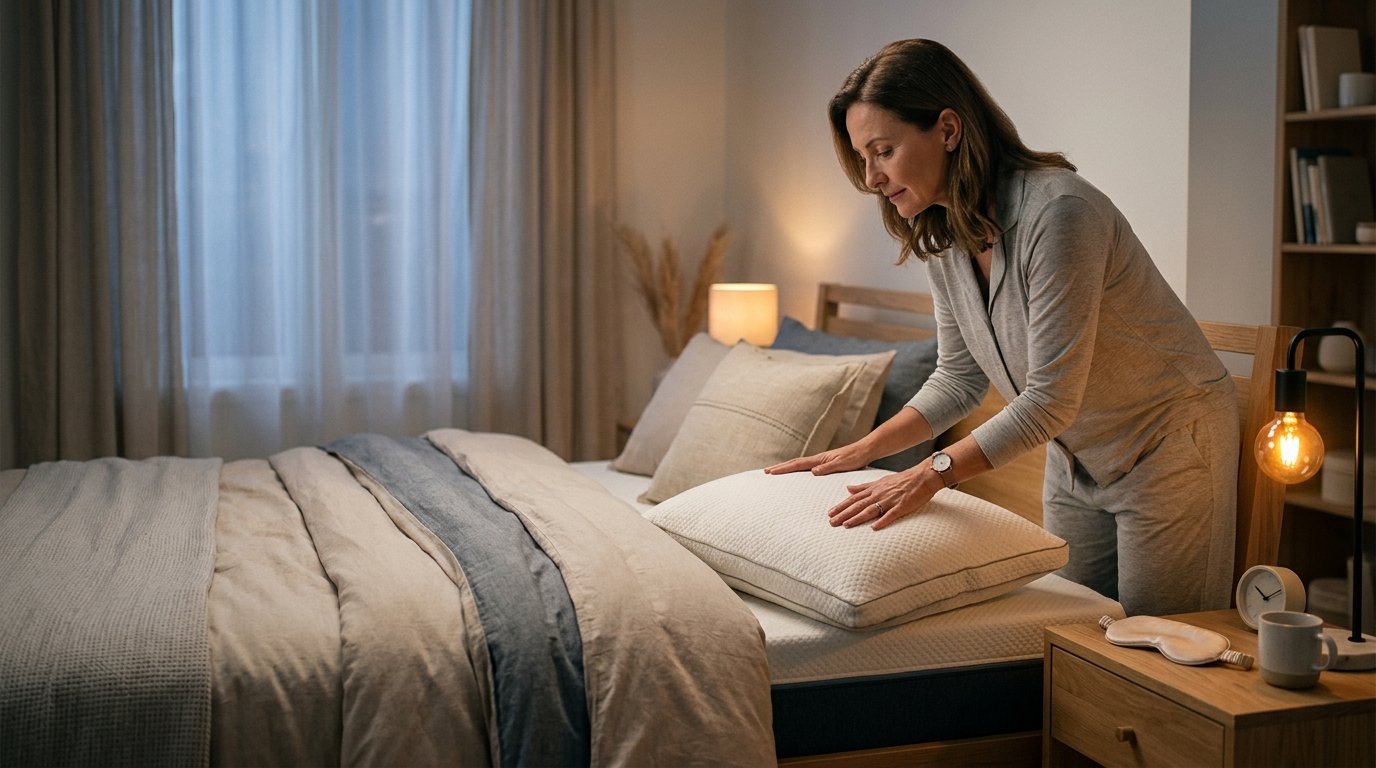
Cheap relative to a mattress and often the faster fix for neck discomfort. The principle is straightforward: the pillow should fill the gap between your head and the mattress so that your neck stays roughly in line with your spine.
That means side sleepers usually need a thicker, firmer pillow; front sleepers a very thin one or none; back sleepers something in between. If you wake with neck pain, the pillow is a much cheaper thing to change first than the mattress.
Pillows also wear out. If it stays folded when you fold it, it is no longer supporting anything.
Light and temperature, the two cheap wins
Blackout blinds or curtains are inexpensive and address a real, physical problem if your bedroom gets street light or early sun. A well-fitted blind does more than an expensive gadget for most people. A sleep mask does the same job for very little if the window is difficult.
Temperature matters more than most bedding marketing suggests. A cooler room generally suits sleep better than a warm one, and breathable natural-fibre bedding helps if you sleep hot. Duvets are sold by warmth rating for exactly this reason, and owning a lighter summer duvet is a small, effective purchase.
Noise. Earplugs are cheap and effective. A white noise machine does the same job as a fan for most people, and a fan also addresses temperature.
Bedding
Thread count is a weak signal and easily inflated by counting plies. Fibre and weave matter more. Percale is crisp and cool; sateen is smoother and warmer; linen is breathable and gets softer with washing. Choose for how you sleep rather than for a number on the packaging.
Gadgets and trackers
Sleep trackers are interesting and can highlight patterns, particularly around consistency of bedtime. They are estimating sleep stages from movement and heart rate rather than measuring them directly, so treat the detailed stage breakdown as approximate.
There is also a documented downside: some people become anxious about their sleep scores in a way that makes sleeping worse. If a tracker is making you worry, that is a reason to stop using it.
Sunrise alarm clocks have a plausible mechanism and many people find them pleasant, particularly through dark winters. They are modestly priced and fairly low risk as purchases go.
The order I would spend in
Blackout first, because it is cheap and physical. Then the pillow, because it is cheap and specific. Then bedding and duvet weight appropriate to the season. Then, if the problem persists, the mattress — bought on a long trial, at a discount, after the cheaper variables have been ruled out.
And before any of it, the free changes: a consistent bedtime, less screen brightness late, and less caffeine after the early afternoon. They cost nothing, and they are the ones most likely to make the purchases unnecessary.