A first aid kit is one of the few purchases where the cheap pre-made option is often genuinely poor value. The boxes are filled to look substantial — dozens of identical small plasters, a token pair of scissors that will not cut fabric — while missing things you would reach for in the first minute.
Assembling your own is straightforward. And a necessary caveat: a kit is for minor injuries. For anything involving heavy bleeding, breathing difficulty, head injury, chest pain, burns beyond a small surface area, or any situation you are unsure about, contact emergency services. Consider a proper first aid course too — the knowledge matters more than the contents of the box.
Wound care, the part you will actually use
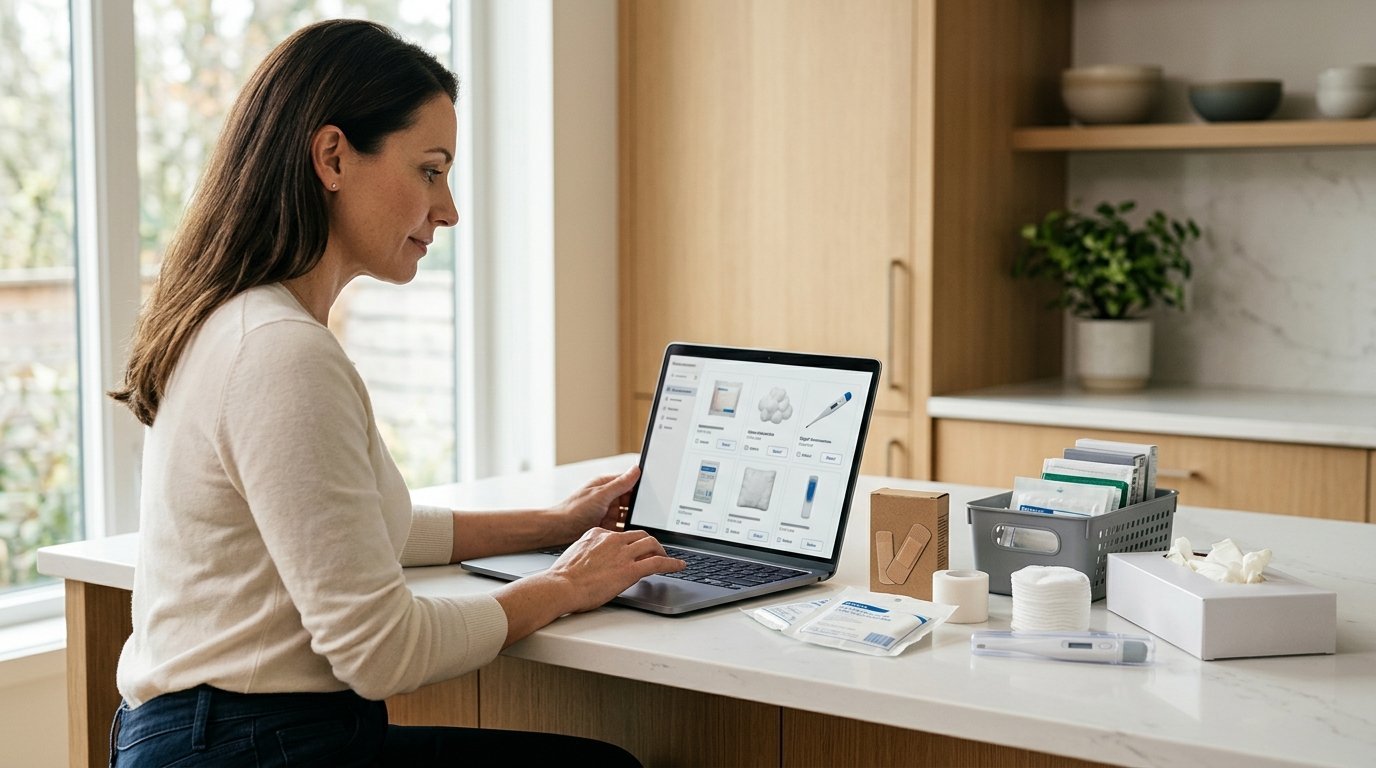
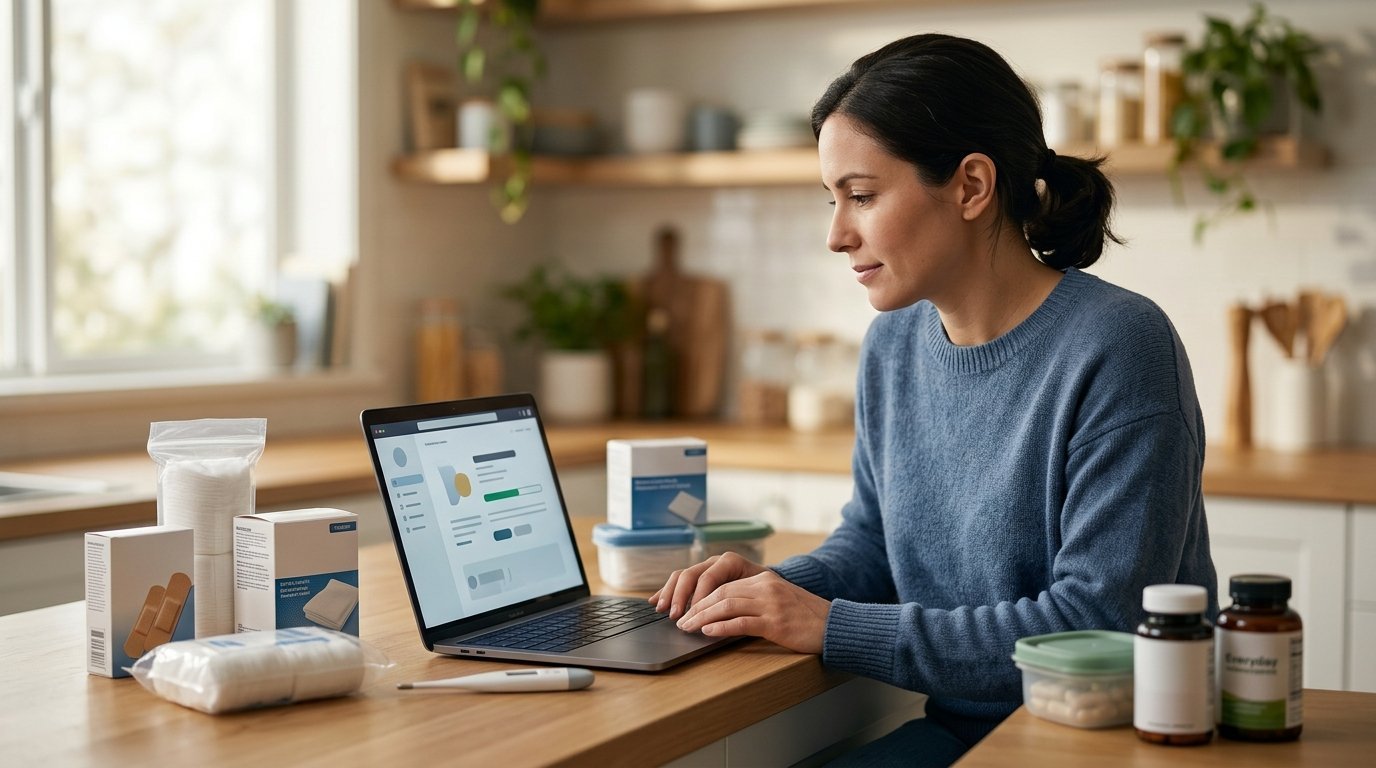
- Adhesive plasters in several sizes, including a few fabric ones, which stay on better than plastic. Knuckle and fingertip shapes are worth having because those are the injuries that happen most.
- Sterile gauze pads in a couple of sizes, for anything larger than a plaster covers.
- A roll of medical tape to hold gauze in place.
- A conforming bandage or two for wrapping.
- Antiseptic wipes or a saline solution for cleaning a wound before dressing it.
- Sterile saline pods, which are also the right thing for flushing something out of an eye.
- Non-latex disposable gloves. Cheap, and the right first step when helping someone else.
Tools
- Scissors that actually cut. Tuff-cut or blunt-tipped shears will get through a sleeve; the small folding scissors in cheap kits will not.
- Fine-point tweezers for splinters. Precision matters here, so this is a place to spend a little more.
- A digital thermometer.
- Safety pins for securing bandages.
- A small torch, useful more often than expected.
Medicines and topicals
Keep a small supply of the over-the-counter medicines your household actually uses — typically a general painkiller and an antihistamine — in the doses appropriate for the people in the house. Children's formulations are dosed by age and weight, so if there are children in the household, keep the correct product rather than planning to split an adult dose.
An antiseptic cream and a burn gel round it out. Ask a pharmacist what is suitable for your household; they will answer this question happily and for free, and they will flag anything that interacts with medication you already take.
Cold and support
An instant cold pack is convenient for sprains and knocks away from a freezer. An elastic support bandage covers the same category of injury. Neither is expensive.
What pre-made kits typically get wrong
Volume over usefulness: forty plasters of one size, one pair of gloves. Tools that do not work: scissors that cannot cut gauze, tweezers too blunt for a splinter. Items with a short shelf life bundled in at manufacture, so the antiseptic wipes may be near expiry before you open the box.
The reasonable middle path is buying a decent empty case or a basic kit and upgrading the parts that matter — the scissors, the tweezers, the plaster selection — rather than either extreme.
Where to keep it
Somewhere everyone in the household knows about, not in a cupboard only one person can reach. Bathrooms are the traditional choice and the worst one, because heat and humidity shorten the life of medicines and adhesives. A hallway cupboard or kitchen shelf is better.
A second, smaller kit in the car is worth having, with the caveat that a car's temperature swings are hard on medicines. Keep that one to dressings and tools.
Keeping it current
Check it twice a year — the clock change is an easy reminder. Look at expiry dates on medicines, wipes and saline, replace anything used, and confirm the sterile packaging is intact. An expired kit that nobody has opened in three years is only a kit in name.
Write the date of the check on a slip of paper inside the lid. It takes ten minutes and it is the difference between a box of supplies and a box of expired supplies.